Most buyers walk into Beaufort's Historic District expecting a trade. Wider porches, heart pine floors, live oaks arching over the street, and in exchange, months lost to a review board before anyone can so much as replace a window. That trade sounds reasonable. It also isn't what the listing data shows.
In a March 2026 snapshot of active listings, homes inside the Historic District carried a median list price near $1.05 million and moved in about 81 days. The citywide Beaufort median at the same time sat closer to $529,000, with homes typically taking around 101 days to sell. The neighborhood with the most regulatory oversight in the entire city sold faster than the city around it.
That gap is worth sitting with, because it changes the question a serious buyer should be asking. The friction that actually catches people off guard in this district has little to do with the review board's calendar, which is public and predictable. It has everything to do with not knowing, before closing, which of two separate rulebooks applies to a specific house on a specific street, or discovering the paperwork you needed only after you've already signed a contract with a renovation plan attached to it.
The Certificate You Need Before the Contractor Starts
Beaufort's original town plat dates to 1711, and the 304-acre core of the city has carried National Register status since 1969 and National Historic Landmark designation since 1973. Inside that boundary, the Historic District Review Board holds authority over a defined list of exterior work: additions, demolitions, new construction, renovations, and most site work. The mechanism is called a Certificate of Appropriateness, and the board issues it after reviewing plans against the city's Preservation Manual.
The board meets the second Wednesday of each month at 2 p.m., and most projects move through three stages, conceptual, preliminary, and final. That schedule isn't the surprise. The surprise is not knowing, before you own the house, which items on your renovation wish list will need to pass through it.
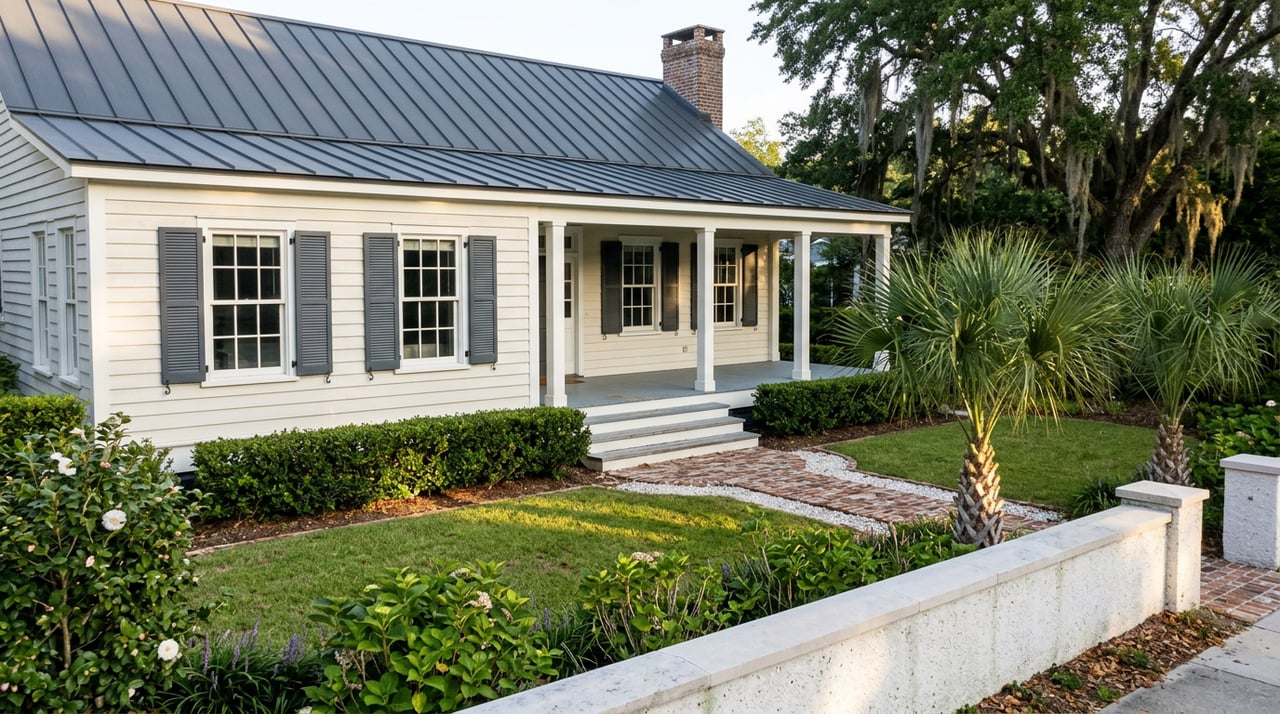
Windows and roofs are the two most common places buyers get caught. Beaufort's preservation guidance treats porches and roofs as character-defining elements, meaning changes to either should go through review early rather than after a contractor is already scheduled. Windows carry their own standard: a historic window is generally expected to be repaired first, with full replacement typically approved only once deterioration is too advanced to fix. Roofing has its own material list, too. Terne metal, the lead-tin alloy historically used on Beaufort roofs, is no longer manufactured, so the current manual steers owners toward terne-coated stainless steel, copper, painted steel, or painted aluminum instead. None of this shows up on a portal listing page. All of it shows up the first time a buyer calls a roofer.
Contributing or Not: One Label, Two Different Answers
A property's status as "contributing" or "non-contributing," determined by the 1997 Beaufort County Above Ground Historic Sites Survey, sounds like a single yes-or-no question about a house's age or importance. It actually answers two separate financial questions, and it doesn't answer them the same way.
| Contributing property | Non-contributing property | |
|---|---|---|
| Exterior review by the Historic Review Board | Certificate of Appropriateness required, reviewed against the full Preservation Manual | Certificate of Appropriateness still typically required, but design latitude tends to be wider |
| Local Bailey Bill tax freeze | Qualifies through 1997 survey listing | Can still qualify if the property sits inside the district and is at least 50 years old |
| South Carolina's 25% rehabilitation tax credit | Treated as a certified historic structure, credit available | Not eligible unless individually listed on the National Register |
That middle row is the one buyers miss most often. A house doesn't have to carry contributing status to access Beaufort's local tax freeze. It just has to sit inside the district and clear the 50-year mark. But the state's income tax credit draws a tighter line: without contributing status or individual National Register listing, that 25% credit isn't on the table at all, no matter how old the house is or how much work it needs. Two different agencies, two different thresholds, one property.
The Bailey Bill: Beaufort's Underused Lever
The City of Beaufort and Beaufort County adopted the Bailey Bill in September 2014, and it remains one of the more overlooked tools available to a buyer planning real renovation work. Put a minimum of 75 percent of the building's fair market value back into an eligible rehabilitation, get the work approved, and the assessed value freezes at the pre-rehabilitation number for the next ten years. On a Historic District property already carrying a seven-figure price tag, that freeze can be worth real money over a decade, and it's a program most out-of-town buyers have never heard of before their first closing here.
The application itself is modest. Fees run $150 for a single-family home or duplex and $300 for other building types, and the first Historic Review Board application fee gets waived. The process runs through a pre-application conference, attendance at an HRB meeting, a signed Memorandum of Understanding once preliminary approval comes through, and a final Part B application once the work is done. None of it is complicated. It's just easy to miss if nobody tells you it exists.
The State Credit's Timing Trap
South Carolina's historic residential income tax credit refunds 25 percent of qualified rehabilitation costs once expenses clear $15,000 within a 36-month window, provided the work is certified before it begins and follows the Secretary of the Interior's Standards. That last condition is the one that costs people the credit entirely. A buyer who starts demolition or construction before applying for certification has already disqualified the project, regardless of how much gets spent afterward.
The sequence that actually protects eligibility looks like this:
- Confirm the property qualifies as a certified historic structure, either individually listed on the National Register or contributing under the 1997 survey.
- Apply for certification before any work begins, not after a contractor is already on site.
- Track qualified expenses against the $15,000 threshold inside the 36-month window.
- Complete the work to the Secretary of the Interior's Standards, then finalize the certification to claim the credit.
Buyers who fold this sequence into their closing timeline, rather than their renovation timeline, are the ones who actually collect on it.
Two Insurance Bills, Not One
Beaufort sits on Port Royal Island surrounded by tidal marsh, and standard homeowners insurance never covers flood damage here, in the Historic District or anywhere else. Flood coverage runs through the National Flood Insurance Program as its own separate policy, with up to $250,000 in building coverage available to homeowners and a 30-day waiting period before that coverage takes effect. That waiting period alone is a reason to request quotes during due diligence rather than the week before closing.
Elevation certificates matter more here than the paperwork suggests. Premiums are set by the relationship between a home's lowest floor and the base flood elevation on FEMA's maps, and a few documented inches of elevation difference can swing an annual premium by thousands of dollars. Serious buyers request that certificate early, before due diligence deadlines start closing in, rather than discovering the number after they've already waived contingencies.
What the Market Is Actually Pricing
With only 17 vintage listings inside the Historic District against 43 across greater Beaufort in that same spring 2026 snapshot, scarcity explains part of the faster pace. It doesn't explain all of it. Buyers who target this specific district tend to arrive prepared, because the properties draw enough sustained local attention that agents, contractors, and lenders already understand the review sequence before an offer gets written. The paperwork that stalls an unprepared buyer barely registers for someone who has already priced flood insurance, confirmed contributing status, and lined up a contractor who has stood in front of the review board before. The added oversight isn't slowing this market. It's sorting it, and rewarding the buyers who did their homework before they made an offer instead of after.
FAQ
Do I need Historic Review Board approval for interior work? Generally no. Interior updates that don't touch character-defining exterior elements move through standard city permitting instead of the board.
Does buying a non-contributing home inside the district mean I'm free from review? No. Most exterior work still needs a Certificate of Appropriateness, though the design review tends to be lighter than it would be for a contributing structure.
Can I combine the Bailey Bill with the state's 25% tax credit? Yes, if the property qualifies for both, but they run through different agencies with different eligibility rules and the state credit's before-work certification requirement, so confirm each one separately before any work starts.
Buying inside Beaufort's Historic District rewards buyers who ask these questions before they write an offer, not after. If you're weighing a contributing cottage in The Point against a newer build a few blocks off Bay Street, Karen Ryan can walk you through what a specific property's status actually means for your renovation plans, your insurance quote, and your closing timeline. Let's Connect.